HDPE Couplings
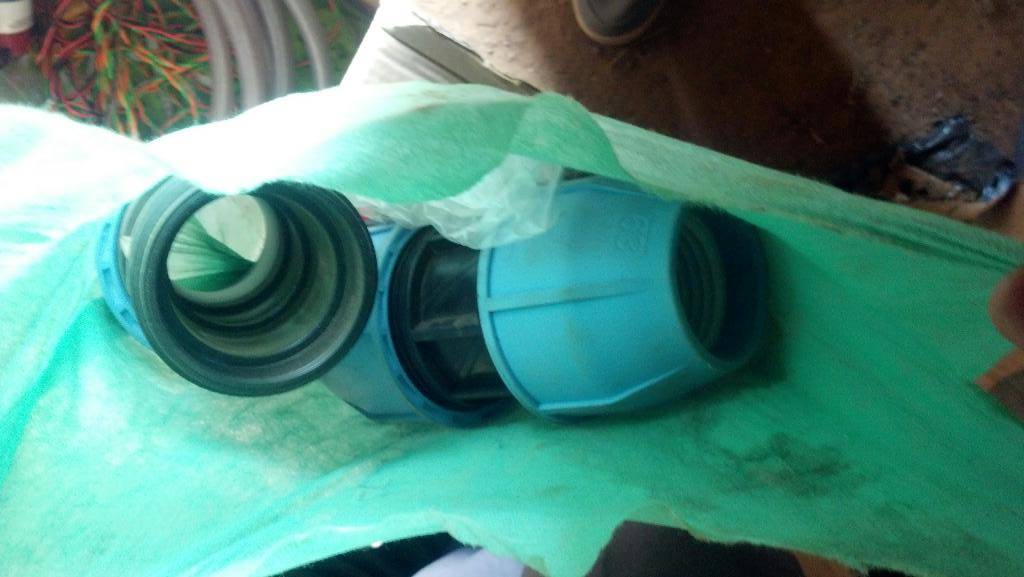
HDPE couplings are molded or extruded fittings—typically made of high‑density polyethylene—that connect two sections of HDPE pipe or conduit, providing a leak‑tight, pressure‑rated joint for water, gas, sewage, or other fluid systems.
The HDPE (High Density Polyethylene) couplings are used to connect pipes together.
HDPE Pipes & Couplings in Gold‑Prospecting Operations
(How they’re used, why they’re a good fit, and what extra functions they enable)
| Application | How the HDPE pipe‑and‑coupling system is used | Why HDPE is preferred | Typical design / installation tips |
|---|---|---|---|
| 1. Water‑feed lines for sluice‑box & high‑banker systems | • A continuous HDPE line (usually ½‑ to 2‑in. OD) runs from a portable pump or a water‑source tank to the sluice box inlet. • Couplings (push‑fit, compression, or heat‑fusion) join sections to reach the required length or to bypass obstacles. |
• Very low‑friction inner surface → higher flow rates for the same pump head. • Flexible enough to follow uneven terrain without additional supports. • Resistant to abrasion from sand‑laden water and to UV‑degradation when protected. |
• Use push‑fit (e.g., “push‑on” couplings) for quick field assembly. • For permanent installations, heat‑fusion gives a leak‑free joint that can survive repeated pressure cycles. • Keep the line as straight as possible; use gentle bends (≥ 10 × pipe OD radius) to avoid head loss. |
| 2. Spray‑bars & high‑pressure jet lines for hydraulic mining / placer washing | • HDPE tubing (often 1–3 in. OD) carries high‑pressure water to a spray‑bar that distributes the jet across a wide area of material. • Couplings allow modular spray‑bars to be swapped out or extended. |
• Handles pressures up to 200 psi (or more) without cracking. • Can be buried or placed on the surface; the pipe’s flexibility lets it conform to the terrain. • Chemical‑resistant to the acids and salts often present in placer wash water. |
• Select couplings rated for the operating pressure (e.g., stainless‑steel compression or reinforced push‑fit). • Use a pressure‑rated hose‑clamp or O‑ring seal if the coupler is not self‑locking. • Include a pressure‑relief valve near the pump to protect the system. |
| 3. Water‑pump suction & discharge lines | • HDPE pipe connects the suction side of a sub‑mersible or engine‑driven pump to the water source, and the discharge side to a storage tank, sluice box, or spray‑bar manifold. | • Smooth interior reduces suction friction, improving pump priming. • Can be buried to protect from UV, mechanical damage, and freezing. • Low‑temperature flexibility prevents brittleness in cold climates. |
• Size the pipe for the pump’s flow curve; typically 1‑in. OD for 100–200 gpm pumps. • Use a “suction‑side” rated coupler with a vented air‑bleed to avoid cavitation. |
| 4. Water‑tank (or “holding‑pond”) connections | • Large HDPE tanks (e.g., 1000‑L bulk containers) are linked by HDPE pipe runs to feed points or to a recirculation loop. | • The same corrosion‑ and UV‑resistance that makes HDPE good for field tanks also applies to the plumbing. • Couplings can be quickly disassembled for tank emptying or relocation. |
• Use a “tank‑to‑pipe” adapter with a stainless‑steel clamp to avoid over‑tightening the HDPE. • Install a check valve to prevent back‑flow when the tank empties. |
| 5. Recirculation loops for sluice‑box water reclamation | • A closed‑loop system pumps water from a settling pond, through a filtration screen, back into the sluice box, and repeats. HDPE pipe connects each stage. | • Low‑cost, lightweight, and can be buried to protect from debris and UV. • The smooth surface reduces head loss, saving fuel or electricity. |
• Include a fine‑mesh screen (e.g., 1‑mm opening) at the intake and a sediment‑trap before the pump. • Use a low‑profile, self‑draining coupler at the pump inlet to avoid air pockets. |
| 6. Tailings‑pond dewatering & slurry transport | • HDPE lines move thick slurry from a tailings pond to a dewatering screen or to a disposal point. Couplings allow the line to be extended or repositioned as the pond level changes. | • Handles abrasive, high‑solid‑content fluids (up to 60 % solids) when reinforced or lined. • Can be buried to protect from sunlight‑induced cracking and from accidental punctures. |
• Use “reinforced” HDPE (e.g., with a steel wire braid) or a PE‑liner with a protective outer jacket. • Install a “quick‑connect” coupler with a locking ring for rapid relocation. |
| 7. Dust‑suppression water mist | • A low‑pressure mist system sprays fine water over a crushing or screening area to keep dust down. HDPE tubing distributes water from a small pump to a series of mist nozzles. | • Flexibility lets the line snake around equipment; low‑friction interior keeps pressure stable. • UV‑stabilized HDPE resists degradation from outdoor exposure. |
• Use ½‑in. OD pipe with a series of ¼‑in. mist‑nozzle fittings. • Include a flow‑control valve at each nozzle to balance mist distribution. |
| 8. Portable “field‑water” supply for diver‑pump or hand‑pump systems | • A short HDPE hose (often 25‑ft) connects a portable water‑source (e.g., a stream or tank) to a hand‑pump or small sub‑mersible pump used by prospectors to fill pans or clean concentrates. | • Lightweight and collapsible when empty, making transport easy. • Couplings can be sealed with simple “push‑on” or “quick‑connect” fittings that require no tools. |
• Keep the hose out of direct sunlight when stored; a UV‑protective sleeve adds longevity. • Use a “self‑draining” coupler to prevent water from pooling at the connection. |
| 9. Cold‑weather water lines (freeze‑proof design) | • In alpine or high‑latitude prospecting camps, water must be delivered to processing units even when temperatures dip below 0 °C. HDPE can be buried below the frost line or insulated with a thin sand/soil cover. | • HDPE remains flexible down to –40 °C, resisting cracking that would occur in PVC or metal. • Couplings can be installed with “expansion loops” to accommodate ground movement. |
• Bury pipe at least 12‑18 in. deep (depending on local frost depth). • Use insulated pipe sleeves or a sand/soil blanket to keep the water above freezing. |
| 10. Emergency‑stop or isolation lines | • A quick‑disconnect HDPE coupler can isolate a section of a water‑delivery network for maintenance or to stop flow in case of a leak or equipment failure. | • No tools required; the coupler can be released in seconds, preventing downtime. | • Install a “ball‑type” or “gate‑type” isolation coupler at strategic points (e.g., before each sluice box). • Mark the coupler with a bright color for easy identification. |
Why HDPE Is the Material of Choice for Gold‑Prospecting Water Systems
| Property | Benefit in a Mining / Prospecting Context |
|---|---|
| High flexibility | Can be coiled, bent around rocks, or pulled through tight spaces without kinking. |
| Chemical resistance | Handles acids, salts, and the occasional oil/grease from equipment without degradation. |
| UV & weather resistance | When UV‑stabilized, the pipe survives prolonged sun exposure—critical for open‑pit or desert operations. |
| Low‑temperature toughness | Remains ductile in sub‑zero conditions typical of many gold‑bearing regions (e.g., the Yukon, Alaska). |
| Smooth interior | Reduces head loss, meaning smaller pumps or lower fuel consumption for the same flow rate. |
| Lightweight & portable | A 100‑ft, 2‑in. HDPE line can be carried by a single person, a major advantage for remote, road‑inaccessible sites. |
| Easy joining | Push‑fit, compression, or heat‑fusion couplings allow field crews to assemble or disassemble sections quickly—no welding or special tools required. |
| Cost‑effective | Compared with steel or copper, HDPE is inexpensive, especially when bought in bulk for large‑scale operations. |
| Recyclable | At the end of a project, the pipe can be re‑grinded and reused, aligning with environmental stewardship goals. |
Practical Example: Setting Up a Portable “Hydraulic Sluice” System
- Water Source – A 500‑L collapsible water tank (often made of HDPE itself).
- Supply Line – 1‑in. OD HDPE pipe, 30 ft long, fitted with a push‑fit coupler at the tank outlet.
- Pump – Small 2‑hp sub‑mersible pump placed inside the tank; suction line is a ¾‑in. HDPE hose with a self‑draining coupler to prevent air lock.
- Distribution Manifold – A short 2‑in. HDPE “spider” manifold (four ½‑in. branch ports) with compression couplings that feed four ½‑in. spray‑bars placed along the sluice.
- Recirculation – After water exits the sluice, it flows into a settling pond; a 2‑in. HDPE return line (with a quick‑connect coupler) pumps the water back to the tank.
- Control – A simple ball valve at the manifold inlet isolates the whole system for quick shutdown or maintenance.
All of the above components are joined using standard HDPE push‑fit couplings that can be assembled in under a minute, require no tools, and can be disassembled just as quickly when the operation moves to a new location.
Maintenance & Longevity Tips
| Issue | Prevention / Fix |
|---|---|
| Abrasion from sand or gravel | Use a protective PVC or steel sleeve around the pipe where it contacts rough surfaces; replace worn sections promptly. |
| UV degradation | Store unused pipe in shade or use UV‑stabilized pipe; if exposure is unavoidable, wrap the pipe in a reflective tarp. |
| Freezing | Bury below the frost line or insulate; add a small amount of antifreeze (propylene glycol) to the water if freezing is expected. |
| Leak at couplings | Tighten compression fittings to the manufacturer’s torque spec; replace worn O‑rings; for push‑fit, ensure the pipe is fully inserted and the locking ring is seated. |
| Blockage from sediment | Install a mesh screen (1‑mm opening) at the intake; flush the line with a short burst of high‑pressure water periodically. |
| Pipe collapse under load | For high‑pressure spray‑bars, use reinforced HDPE (e.g., with a steel braid) or add an external support cage. |
Bottom Line
HDPE pipes and couplings give gold‑prospectors a versatile, rugged, and economical plumbing backbone that can be adapted to virtually every water‑handling need on a remote site—from feeding high‑pressure spray‑bars that wash placer material, to recirculating processing water, to delivering clean water to remote camps. Because the material is flexible, chemically resistant, and easy to join in the field, it enables rapid deployment, easy relocation, and reliable operation in the toughest outdoor conditions that gold prospecting demands.
 Telegram at username
@rcdrun
Telegram at username
@rcdrun WhatsApp Business